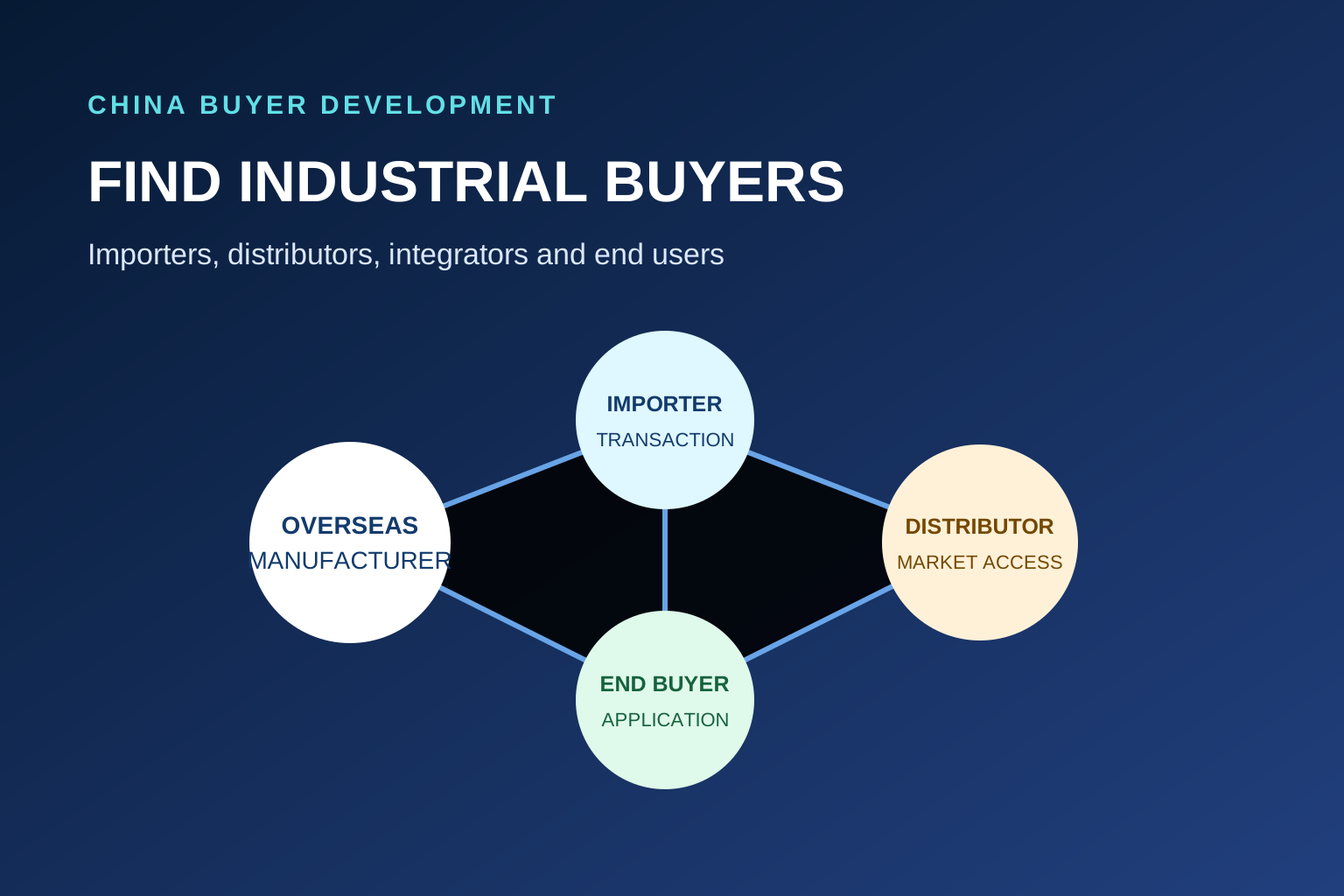
To find industrial buyers in China, an overseas manufacturer first needs to define who can actually buy, import, specify, distribute or influence the product. A long company list is not a buyer-acquisition strategy.
The most reliable process combines Chinese demand signals, sector research, targeted outreach, local-language qualification and sales feedback. It separates end buyers, importers, distributors, integrators and channel partners so the company can test the right commercial path.
Define the buyer role before searching for companies
An industrial end user may buy for its own plant. An importer handles cross-border transaction and documentation. A distributor holds local relationships and may carry stock. An integrator specifies products within a larger solution. The same company can perform several roles, but the qualification questions are different.
Write the target role, industry, application, geography, company scale, technical capability and expected next action. This prevents a database from being filled with companies that are relevant only by name.
Use Chinese demand signals to find industrial buyers
Chinese search terms, industry portals, public tender or project information, exhibitions, technical media, company websites and existing distributor networks can reveal active categories and buyer language. Sources should be used as evidence inputs, not treated as verified leads by default.
Search advertising and localized content can also show which applications and problems create response. The search term that generated an inquiry is often more useful than the broad keyword selected by the advertiser.
- Chinese product and application searches
- Industry association and exhibition ecosystems
- Technical articles and project references
- Importer, distributor and integrator directories
- Competitor channel and customer evidence
- Existing inquiry and sales records
Build a qualified outreach list, not a volume list
Each candidate should have a reason for inclusion: product fit, served industry, territory, technical capability, customer type, import activity or evidence of an adjacent portfolio. Record the source and uncertainty instead of presenting every name as a confirmed buyer.
Prioritize smaller batches for outreach. Chinese-language contact and a clear application-specific reason usually perform better than a generic global introduction. The objective is to start a relevant commercial conversation and learn why candidates accept or reject the offer.
| Candidate type | Qualification question | Possible next step |
|---|---|---|
| Industrial end buyer | Does the application and purchase process fit? | Technical discovery or sample discussion |
| Importer | Can it handle the category, documentation and buyer route? | Import feasibility and commercial terms |
| Distributor | Does it have relevant customers, coverage and commitment? | Channel interview and pilot criteria |
| Integrator or OEM partner | Can the product fit a larger system or specification? | Engineering review or joint opportunity |
| Sales partner | Is there a defined territory, role and reporting process? | Scoped market-development test |
Qualify China buyers and importers before investing more
Confirm legal identity, website and contact details, served industries, product overlap, technical capability, customer access and willingness to discuss a defined next step. Distributor or importer status should not be inferred from a translated company name alone.
For partners, examine territory, competing brands, staffing, sales process, commercial expectations, reporting and pilot commitment. The objective is not to eliminate every risk but to identify assumptions that need verification before exclusivity, inventory or major marketing spend.
Connect buyer search to market-entry decisions
Buyer and importer research should feed the wider China market-entry plan. Repeated objections may indicate a pricing, certification, localization, product or support problem. Positive response from one segment can guide search advertising, content and distributor recruitment.
PPCOps supports foreign companies with China buyer research, industrial lead generation, distributor search and market validation. We do not sell an unverified “guaranteed buyer list” and do not guarantee replies, appointments or transactions.
Frequently asked questions
What is the difference between an importer and a distributor in China?
An importer manages cross-border transaction requirements, while a distributor focuses on local market coverage; one company may perform both roles.
Can I buy a list of industrial buyers in China?
Lists can be a research input, but each company, role and contact still needs verification and a reason for outreach.
How do I find distributors in China for industrial products?
Define the target channel, use Chinese sources and market evidence, approach prioritized candidates and evaluate customer access, capability and commitment.
Can a buyer-search service guarantee meetings?
No. Response depends on category fit, message, evidence, commercial terms and timing.
Turn the research into a scoped China test
PPCOps helps international teams define the buyer, route, platform, localization and evidence required before committing to a larger China program.
Discuss your China project